
7 Boat Winterization Tips to Protect Your Boat This Season
Why Is Winterization for Boats So Important?
To ensure you can make the most out of your boat each spring and summer, investing in proper boat maintenance each winter will keep it operating at its best for years to come. Even if you live in an environment that doesn’t see extreme freezing temperatures, improper care of your boat during the winter months can result in major engine issues, such as cracking or bursting.
The additional freezing cold and condensation can wreak havoc on your boat’s electrical and mechanical systems. This will not only increase the risk to the operation and safety of your boat but will also prolong the time required to address maintenance and repairs. Additionally, failing to perform preventative maintenance will only create larger issues and hinder the resale value of your boat.
Taking the time to winterize your boat at the end of the year, along with the LAUNCH Boat Protection Plan is sure to provide confidence that your boat maintenance will be covered and stable during the long winter months.
What Do You Need to Winterize Your Boat?
The cost to winterize a boat is a great investment in the overall quality of your boat, as well as avoiding larger maintenance bills down the road. Doing it yourself will help you become familiar with your boat and address minor issues before they become major problems. To winterize your boat yourself, you’ll need:
- Antifreeze (marine-grade, non-toxic)
- Fogging oil
- Fuel stabilizer
- Engine/motor oil
- Oil filters, gear lube, and drain plug gaskets
- Bilge cleaner, lower-unit lube pump, and oil suction pump
If you don’t have all these on hand or even don’t have the best knowledge of boat maintenance, you can always hire a professional.
Step One: Flush and Drain Water Lines
Freezing temperatures cause water to expand, and this can lead to extensive damage to components like your boat’s engine cooling system and plumbing system. Flushing out water and salt will ensure these systems work at the right temperature. Once you drain the water from various systems in your boat, apply antifreeze, as this will be better for your engine throughout the winter months.
Step Two: Replace Engine Oil and Fluids
Just like with our vehicles, essential boat winterization requires proper maintenance of engine oil and transmission system fluids. These are essential to keeping the boat running at its best. Replace your engine oil and filters, and top off your transmission fluid and coolant. These are the lifeblood of your boat, and lubricating all moving parts and grease fittings ensures a smooth operation. Failing to replace these can lead to stiffness and cracking, which can lead to more wear and tear on your engine and transmission over time.
Step Three: Stabilize and Treat Your Fuel
Stabilizing your fuel correctly allows you to avoid hard starts and poor engine performance. First, fill your tank with fresh fuel and then add a fuel stabilizer that will prevent any gum, varnish, or ethanol separation from clogging your fuel lines, fuel injector, and carburetor.
Step Four: Protect Internal Engine Components
As your engine operates over time it can leave drained oil that can lead to scuffing. Fogging oil also comes in handy as it provides a protective film on your engine valves and cylinders, from rust and corrosion. You can further replace any damaged spark plugs at this time.
Step Five: Remove All Valuables from the Boat
In the event your boat will be sitting out in the open for several months, it would be wise to remove any personal valuables from the boat, like appliances, electronics, and other costly items that can be hard to replace. If you need to keep items like electronics or appliances on board, store them in a dry place out of view, and they should not be plugged into any outlets. Any batteries can be stored indoors and charged periodically. Now is also the perfect time to do any deep cleaning of your boat’s interior cabin.
Step Six: Clean, Polish, and Wax
After all the internal maintenance is done for the winter, a proper wash along with waterproofing and wax will keep the boat’s exterior intact all season long. Pressure wash the exterior surfaces like the topsides, hull, deck, and bottom with an acid-based solution to prevent any oxidation or mildew from forming throughout the off season. Be sure to also thoroughly clean teak, plastic, glass, vinyl, and canvas surfaces of any buildup of debris.
Step Seven: Choose Proper Winter Storage
Once you’re done winterizing your boat inside and out, you’ll want one final layer of protection. Some may have the option to put their boat in indoor storage, but others may only be able to store them outside. This all depends on where you live and if you have the means to ship and store your boat indoors.
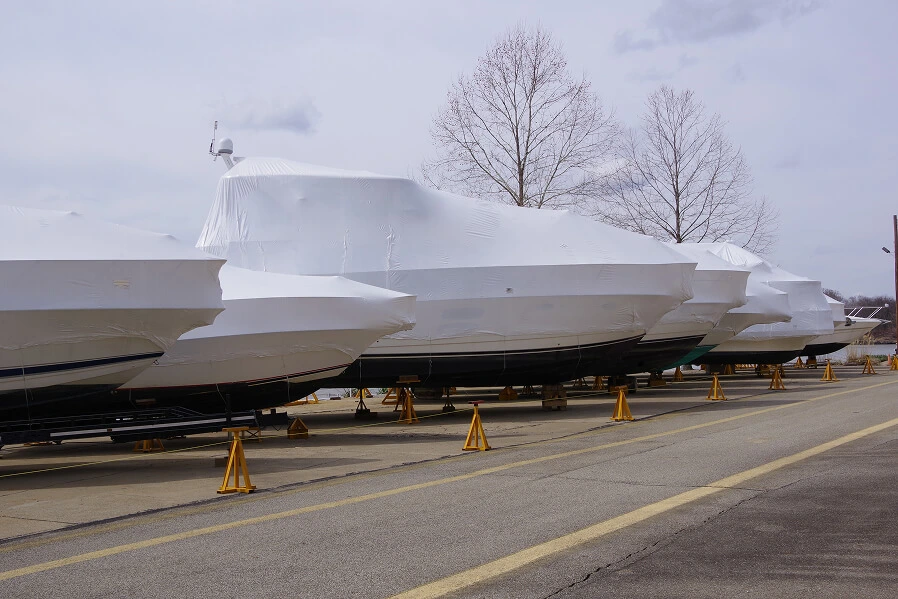
If you’re in the latter category, you can choose between a boat cover or a canvas cover, as well as even shrink wrap. Think of it as the perfect gift for yourself to unwrap come spring for all your hard work of taking proper care of your boat.
Mid-Season Maintenance Tips for Year-Round Boaters
You may be one of the lucky boaters with ideal weather to enjoy the water all year round, but that doesn’t mean you can’t ensure you are also taking proper care of your boat during times when the holidays and other life events take precedent.
Do regular electrical inspections on the following:
- Batteries
- Terminals and cable ends
- Controls and knobs like switches, lights, and horns
- Pump float switch and bilge system
Also, do routine inspections on mechanical parts, including:
- All fluid levels, such as oil, coolant, steering, and transmission fluids
- Engine belts and fuel lines
- Hose connections
- Cut of switches
Now may also be a great opportunity to double-check your safety gear for any items that need updating or replacing.
Protect Your Boat All Year Long with LAUNCH
Understanding how to winterize your boat will ensure its mechanics stay intact, and your boat will be ready for use once the ice and snow melt away and it’s time to head back out onto the water. In addition to taking all of the necessary precautions, the LAUNCH Boat Protection Plan fills that gap with cash reimbursement for additional repairs you may need come springtime. Enroll now to set sail on year-round protection for your boat.
Boat Winterization FAQs:
1. What are the most important boat winterization tips?
The most important boat winterization tips include draining all water lines, stabilizing fuel, changing oil, fogging the engine, and using marine antifreeze. These steps prevent corrosion, cracks, and costly repairs.
2. Do I need to winterize my boat if I live in a warm climate?
Yes, basic boat winterization helps protect your investment year-round, even in warm regions, as moisture, fuel degradation, and corrosion can damage your systems.
3. How much does it cost to winterize a boat?
DIY boat winterization costs only around $100 to $300 for supplies, while professional services can range from $300 to $1,000, depending on the boat size and engine type.
4. What happens if I skip winterizing my boat?
Skipping winterization can cause cracked engine blocks, frozen lines, and electrical failure. Prevention is far cheaper than spring repairs.
5. How can LAUNCH help protect my boat after winterization?
The LAUNCH Boat Protection Plan covers mechanical and electrical breakdowns, your insurance doesn’t, while giving you year-round peace of mind.